 |
 |
WE HAVE NOW MOVED OUR INVENTORY OF ANCIENT AND
www.vcoins.com/calgarycoin
|

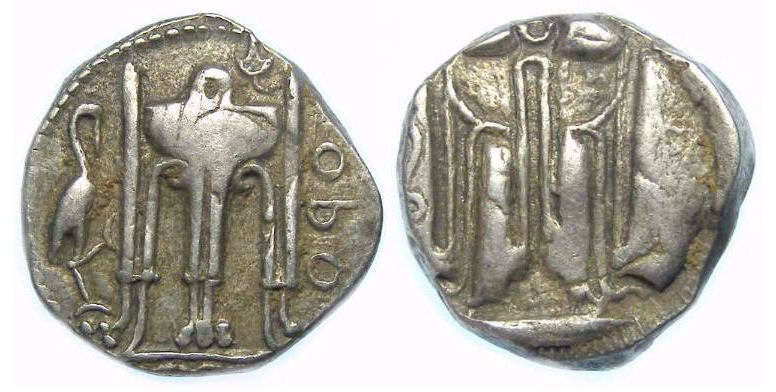 Kroton in Bruttium. ca. 480 to 420 BC.
Silver stater
SOLD
Order
# 3336
|
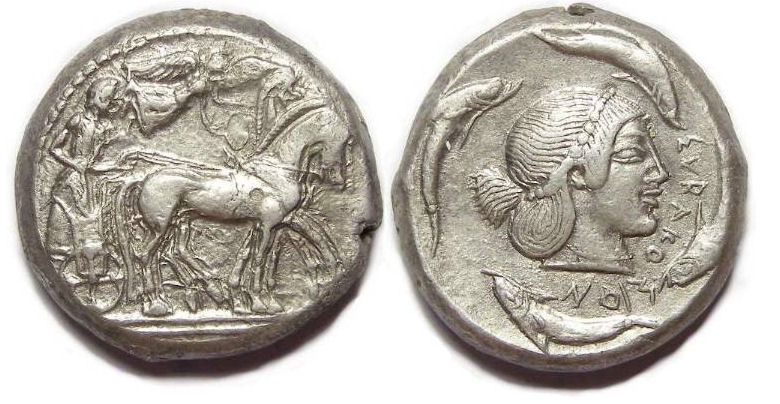 Syracuse in Sicily. ca. 485 to 479 BC.
Silver tetradrachm
SOLD
Order
# 4478
|
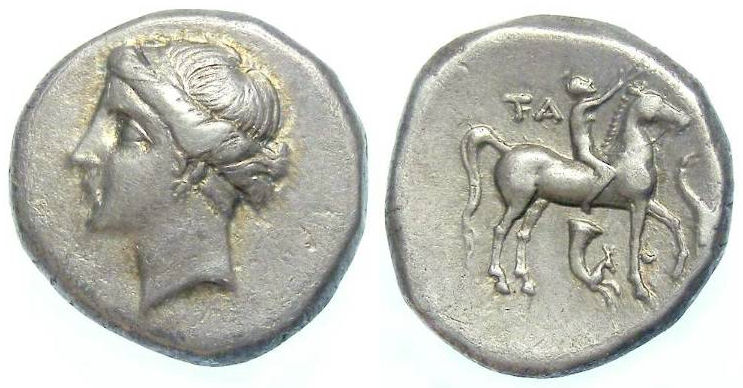 Taras
in Calabria, ca. 302 to 281 BC.
Silver didrachm. Campano-Tarentine type. RARE.
Taras is in Calabria in southern Italy, and is also
known as
Tarentum. This particular coin is from what is known as the
Campano-Tarentin type, because the obverse is based on the coins of
Neapolis in Campania, while the reverse is a Taras type, with an ethnic
that states the coin was issued from Taras. This suggest that it
was
struck during a period of alliance between the two cities. A
search of
the first 500 coins of Taras in coin archieves did not turn up a single
one of these, suggesting it must be a fairly rare type. For reasons I do not understand, it has become
fashionable to call
this coin denomination of nomos. The Greek word "nomos"
appears to
simply mean "acceptable currency" and is more an accounting term
than the name of a specific coin type.
SOLD
Order
# 3344
|
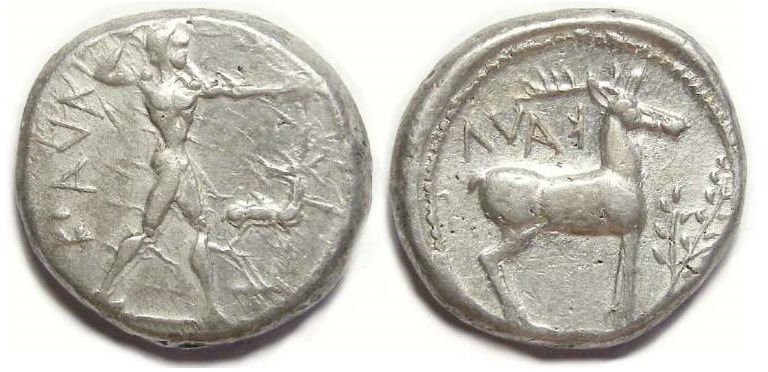 Kaulonia
in Bruttium. ca. 475 to 425 BC.
Silver stater (Nomos)
sold
Order
# 2734
|
ALL PRICES ARE IN US DOLLARS
CANADIAN ORDERS MUST ADD GST/HST TO ALL PRICES
Next page of Greek Coins
Top of Page

HISPANIAThere was a great deal of trade between the Local Spanish population and both the Greeks and Phonecians starting in the 7th century BC. By the 5th century BC most of the trade in the region had come under the control of Carthage and, following the second Punic war, that trade passed to Roman control. SICILYIn 480 BC Sicily was invaded by the Carthaginians. The Sicilian cities rose to the occasion, but Syracuse was the decisive factor in defeating them. This made Syracuse the most important and powerful of the Sicilian cities. ITALY |
Top of Page Copyright © 1997-2005 R & T Enterprises Ltd. |
 |
 |
 |
 |