 |
 |
WE HAVE NOW MOVED OUR INVENTORY OF ANCIENT AND
www.vcoins.com/calgarycoin
|

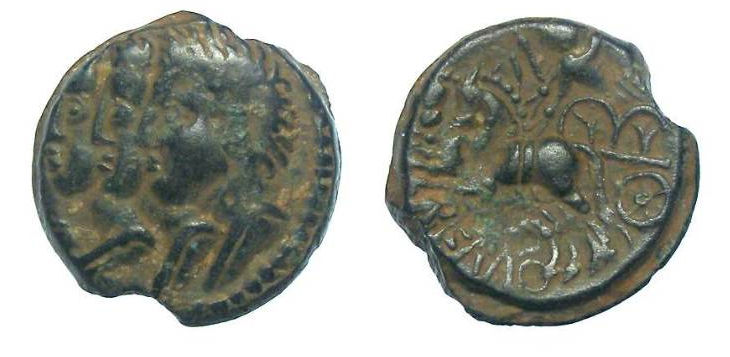 Gaul. Remi, mid 1st centry BC.
AE 15. Very nice example.
SOLD
Order
# 3359
|
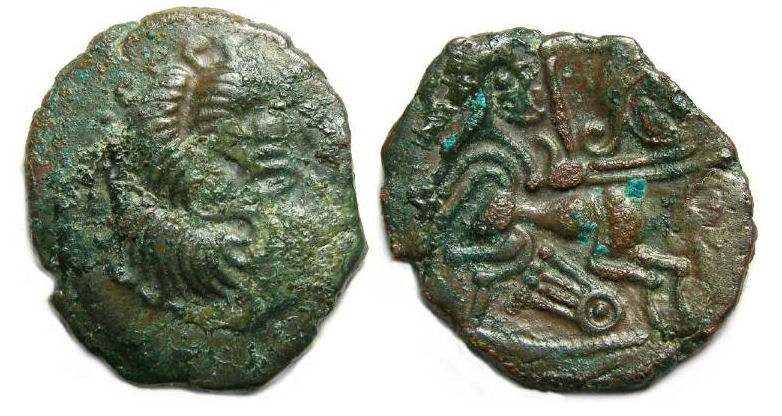 Gaul. Coriosolites (Armorican).
57 / 56 BC. billon stater.
After the Gallic War, thousands of
Coriosolite coins were sent to Hengistbury in England via the island of
Jersey for recycling and large hoards of these coins have been found on
Jersey.
SOLD
Order
# 3810
|
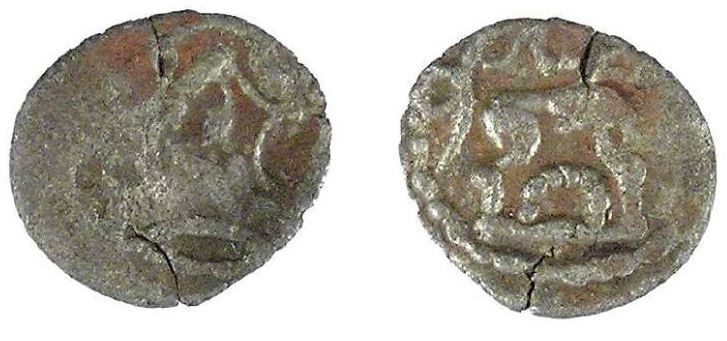 Gaul.
Andecavi. ca. 80 to 50 BC.
Silver obol.
SOLD
Order
# 2671
|
 Kingdom
of Galatia. King Amyntas,
ca. 36 to 24 BC. AE 23. Galatia was a small kingdom in Asia Minor. It was
founded by the Celtic tribes, Tectosages, Tolistobogii and Trocmi in
the 3rd cent. BC. It was given it's independance
as a kingdom by Pompey the Great in 64 BC, and then lost it's
independance when it was absorbed into the Roman Empire as a Province
about 24 BC. Amyntas was the last King of Galatia.
SOLD
Order
# 3649
|
ALL PRICES ARE IN US DOLLARS
CANADIAN ORDERS MUST ADD GST/HST TO ALL PRICES
Next page of Greek Coins
Top of Page

CELTIC COINSThe Celts included several groups of Iron Age tribal people occupying much of northern Europe, Spain, Gaul and the British Isles. They were very late to issue coins, probably having no need for coins until contact with southern Europeans and their trade goods created a need for them. With no domestic coinage of their own, the early Celtic coins often imitated Greek coins of the people they traded with, especially Macedonian coins of Philip II, Alexander the Great and Philip III, but gradually modifying signs to suit Celtic artistic tastes. Over time the origins of the designs become almost unrecogizable and the coins become almost purely Celtic. BRITISH CELTICFRENCH (GAUL) CELTICThe Volcae Tectosages were a people from the Eastern Danubian region who some time prior to 300 BC settled around Carscassonne in South West Gaul. DANUBIAN CELTICThe Danubian Celts occupied the area around the Danube River which separated ancient Thrace and Dacia. Much of their coinage was inspired by that of Alexander the Great and his successors, probably minted in the 3rd and 2nd centuries BC. Later, during the late 2nd and 1st century BC, they also imitated the issues of Thrace and Macedonia. PANNONIAN, CELTIC |
 |
Top of Page Copyright © 1997-2006 R & T Enterprises Ltd. |
 |
 |
 |
 |