 |
 |
WE HAVE NOW MOVED OUR INVENTORY OF ANCIENT AND
www.vcoins.com/calgarycoin
|
|||||||||||||

|
(Reference: R. Whitting & R. Williams and Mitchiner - Ancient and Classical World.) |
|
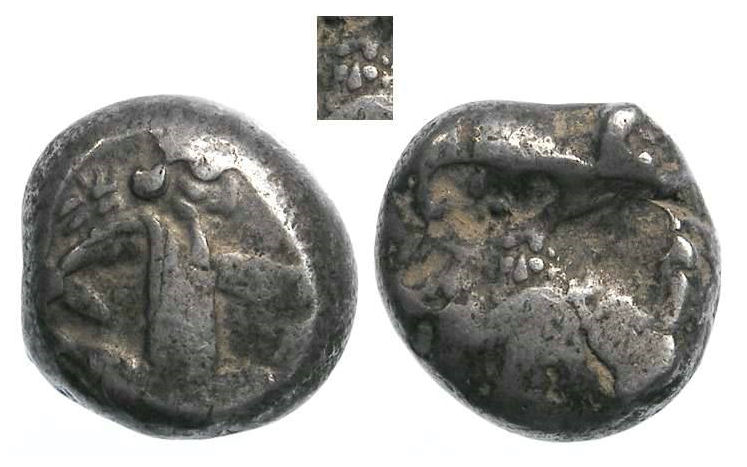 Royal
Persian Coinage. ca. 450 to 330 BC.
Rare type with Lion's scalp on reverse die.
Examples with designs engraved into the reverse die are very scarce.
SOLD
Order
# 2015
|
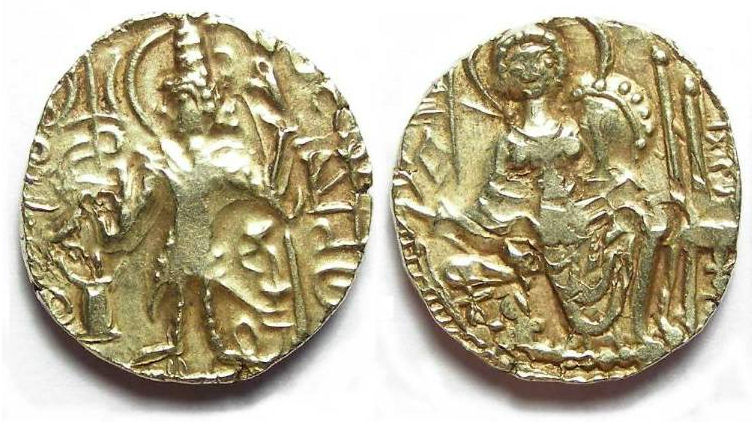 India.
Kushan. Kipanada.
Gold stater. ca. 330 to 360 AD.
SOLD
Order
# 4445
|
 Royal
Persian Coinage. ca. 450 to 330 BC.
Silver Siglos.
SOLD
Order
# 3341
|
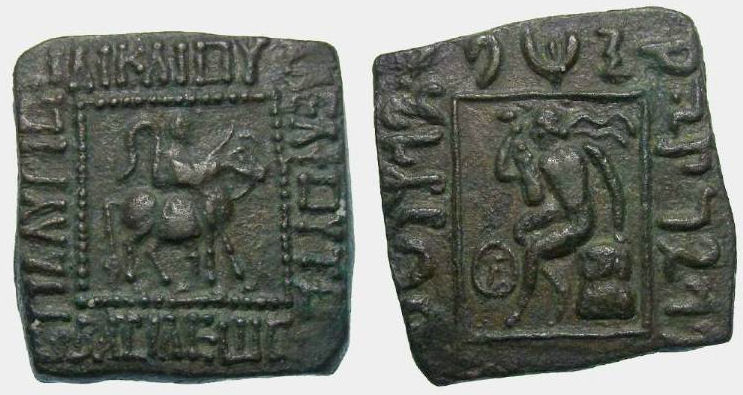 Indo-Skythian.
Spalohores with Spalagadames
This coin was stuck with Spalohores as heir apparent to
Spalagadames in about 75 to 76 BC.
SOLD
Order
# 3049
|
|
(Reference: R. Whitting & R. Williams and Mitchiner - Ancient and Classical World.) |
|
ALL PRICES ARE IN US DOLLARS
CANADIAN ORDERS MUST ADD GST/HST TO ALL PRICES
First page of Greek Coins
Top of Page


LYDIA UNDER PERSIAN RULE(Reference: Sellwood - An Introduction to Sasanian Coins by D. Sellwood; R. Whitting & R. Williams and Mitchiner - Ancient and Classical World.) While most books on ancient coins include the Persians under the heading of Greek, I believe you would have met a very unfortunate end if you ever stood before a Persian King and called him a Greek. The Persians were one of the most important enemies of the Greeks. While the issues of this series are sometimes referred to as Lydian, only the earliest issues are Lydia proper, with later issues probably struck for the expanding Persian Empire. BACTRIA (or Indo-Greek)Alexander the Great's invasion of India established Hellenistic culture in the region. For some time following Alexander's death, his Indian territories remained under Greek control as the Baktro-Sogdiana province of the Seleucid Empire, but in about 256 BC Diodotos declared his independence as the first King of Bactria. After 256 BC the Bactrian Kingdom was quite powerful with a strong Hellenistic influence, even extending its borders into other neighboring Indian Kingdoms. In 130 BC much Bactrian power and territory were lost to invading Scythians and over the next 100 years Bactrian power waned, as the Hellenistic culture was gradually absorbed back into the local Indian cultures. |
Top of Page Copyright © 1997-2005 R & T Enterprises Ltd. |
 |
 |
 |
 |