 |
 |
|
Striking CharacteristicsMost ancient coins were hand-struck by placing a flan between two dies, then hitting the upper die with a hammer. The flans were usually cast as a disk or ball, often pre-flattened before striking. There are many variables in the hand striking process with many things could and often did go wrong. Unlike collectors of modern coins who hunt for mint errors, the challenge for collectors of ancient coins is to find examples that are not mint errors. The following discussion of somethings that could go wrong is by no means a complete list. LOW DIE PRESSUREA common problem on ancient coins is weak strike where the hammer blow or blows did not provide enough pressure to force metal fully into the designs on the die. Normally affects both sides of a coin will show similar weakness in positions directly opposite each other, often where the deepest parts of the design in the die are. Appearing similar to wear, other parts of the designs will sharper showing it is not true wear. 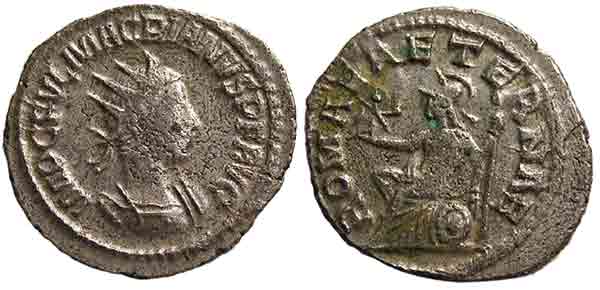
This Macrianus antoninianus is weak at the center of both sides were the highest parts of the designs would be created by the deepest parts of the designs cut into the dies. Had that flat area been due to physical wear his eye would still be clear as that is not a high point, so the eye must have been struck in the first place. The lack of an eye has an adversely effect on the eye-appeal and thus the value. DIE DETERIORATIONAncient dies were hand cut, a labor intensive job, and dies were not unnecessarily discarded while still useful. Obverse and reverse dies deteriorate at different rates and in different ways so were seldom replaced as pairs. It common to see coins struck from one fresh and one deteriorated die. 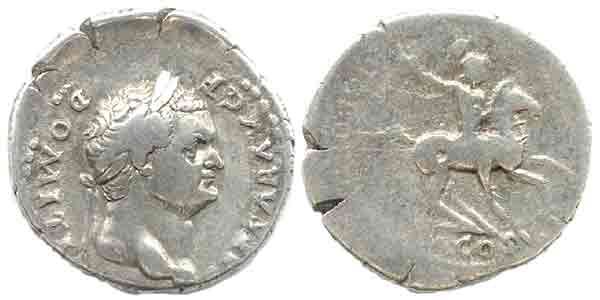
This Domitian denarius has physical wear but the reverse appears more worn than the obverse. Usually coins wear roughly at the same rate on both sides, so this is unlikely due to physical wear. Had this resulted from weak strike one would expect weakness on both sides. What is left is that the reverse was struck from a worn die. Maintaining a clear image of the Emperor appears to have been a priority as one seldom sees a coin struck from an excessively worn obverse die paired with a fresh reverse die. Portrait dies were replaced before too worn but one commonly sees coins struck from nearly completely worn out reverse dies. 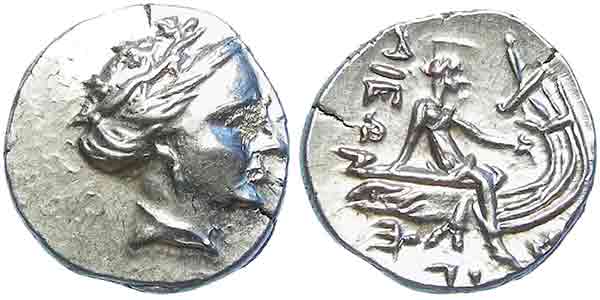
This Euboia tetrobol suffered different die deterioration where sharp edges on the die chipped or crumbled around the eye and a texture of those chips became part of the coins image. This type of die chipping is very common on high relief coins where the designs were cut deeply into the dies, and is often mistakenly referred to as die rust. Many other types of die deterioration can occur, always impacting eye-appeal and thus the value.
TILTED DIE WEAKNESSA perfect strike is only possible if the die surfaces are exactly parallel during striking. The obverse lower die is fixed while the reverse upper die is not and will tend to have a slightly tilt during striking. The edge where the two dies are further apart will receive a slightly weaker strike, with weakness on both sides of the coin in that position. 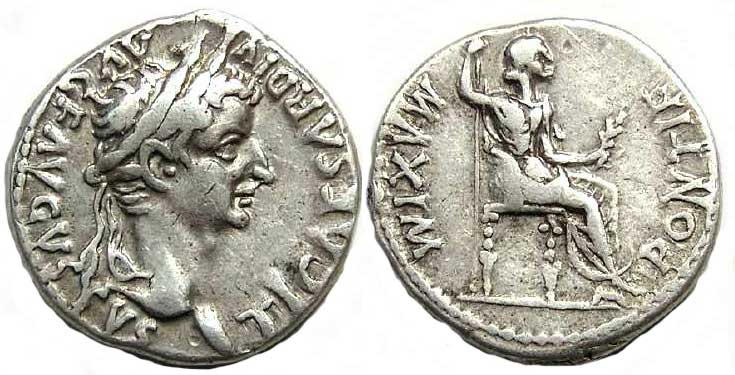
This effect is visible on this Tiberius denarius were the inscription between 9 and 12 o'clock behind the head are strong while those between 2 and 5 o'clock are weak. The corresponding strong and weak inscriptions occur on the reverse, and with a 180 degree die axis are opposite each other as expected. Most Roman denarii exhibit similar die tilt weakness so as this is normal for these coins it has no effect on the value unless excessive, or the coin is heavily worn. 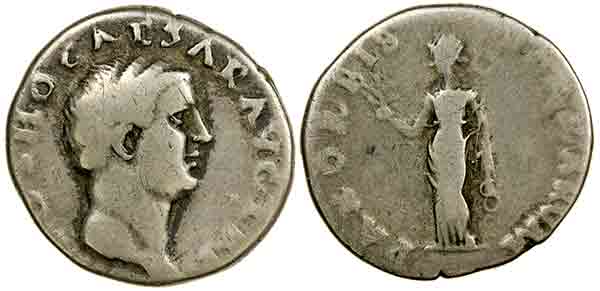
This Otho denarius shows what happens with heavy wear. The weak parts of the inscription have lower relief so heavy wear causes them to blur into the fields while the higher relief stronger parts of the inscription remain clear. The die tilt weakness becomes exaggerated reducing the eye-appeal and thus the value THIN SPOTSThin areas on a flan can result in poor die contact causing weakness with little or no design at those points. 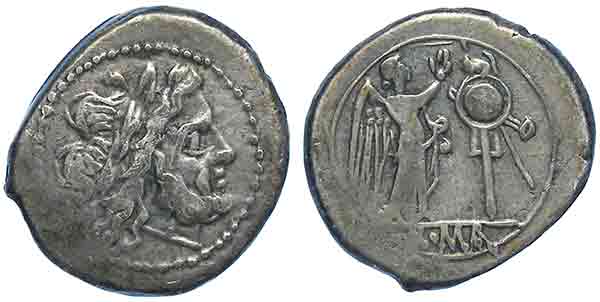
This Roman Republican victoriatus was struck on a flan thin on one edge, with little to no die contact to the lower left. Unlike die tilt weakness where the weakness increased gradually across the coin, thin flan weakness tends to have a more distinct edge where the designs become weak or ending abruptly. Flans can also be thin in the middle with very weak or nearly blank designs in the middle of the coin. I do not have an image of such a coin available at this time but will try to add one later. As with die tilt weakness, the coin will normally be weak on both sides in exactly the same position. Significant parts of the design can be missing, reducing the value. THIN FLAN RELATIVE TO DIE DEPTH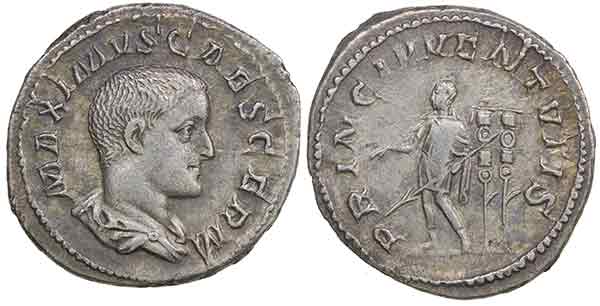
The complete hair details on the obverse of this Maximus denarius show there is little physical wear, yet the center of the reverse appears heavily worn. With a broad flan allowing nearly full border beads to be present at normal weight for the issue the flan has to be thinner. If the depth of the designs engraved into both dies combined exceeds the thickness of the flan, metal cannot be forced fully into those designs and weakness at deepest points will result. Both sides of the coin will usually be affected but in this case the weakness on the obverse is on Maximus' cheek where there is no design, so you don't notice. While appearing similar to low die pressure weakness, a higher die pressure would have been be able to force metal into those deepest designs when there is not enough metal available. DOUBLE STRIKEMost ancient coins required two or more hammer blows get a good strike. Normally the dies lock into the designs and little or no doubling occurred, sometimes the position shifted and we see some doubling. 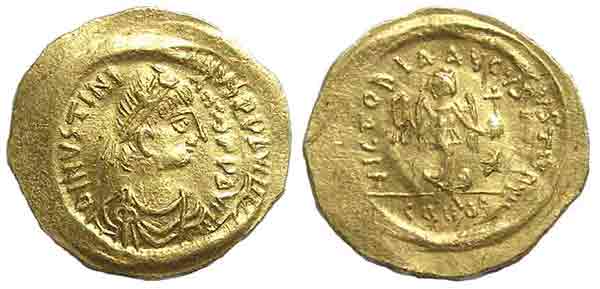
This Justinian tremissis shows very dramatic doubling where the where the flan moved about 15% to the left and rotated about 10 degrees clockwise, between strikes. Designs from the first strike were obliterated if below the main die face. The deepest part of this design was the wide border ring, and parts of the design below that remain. Both sides of this coin were affected the same, showing it was the flan shifted position between strikes. Unlike modern coins on which doubling usually increases value, on ancient coins value is usually decreased. OVER STRIKESome ancient coins are struck over recycled earlier coins, often with traces of the original design remaining. Appearing similar to a double strike, the cause and the effect on value are different. 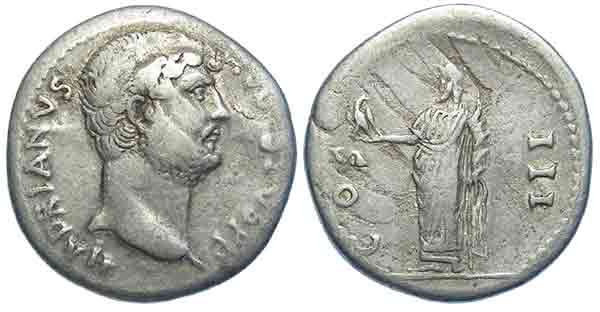
This Hadrian cistophorus was struck over an Augustus wheat ears cistophorus from about 150 years earlier. The Augustus obverse was nearly obliterated but parts of the wheat ears remain clear. How the value of this exact example is affected is subjective. Some collectors prefer examples with clear under types while others do not. How the value is affected depends on one's personal preference. Many other striking problems can occur, and most affect the coin's value relative to how the problem affects its eye-appeal. 
Next page: Flan characteristics Copyright © 2016 R & T Enterprises Ltd. |
 |
 |