 |
 |
|
Centering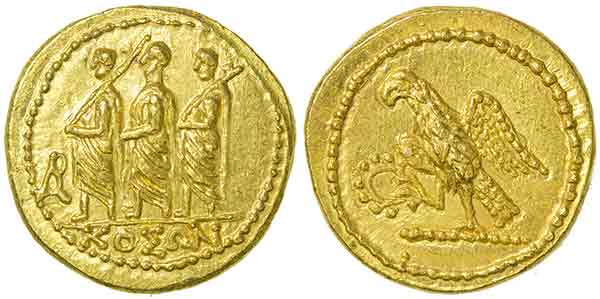
Most ancient coins were struck with hand held dies often poorly positioned on imperfect flans. Rarely does one see an ancient coin perfectly centered on a nearly round flan large enough to take the entire design as we do with this Koson stater. Price guides assume coins will be a little off-center and the flans slightly too small to take the full design, so exceptionally well centered examples command premium prices. Perfect Centering and Medallic Strikes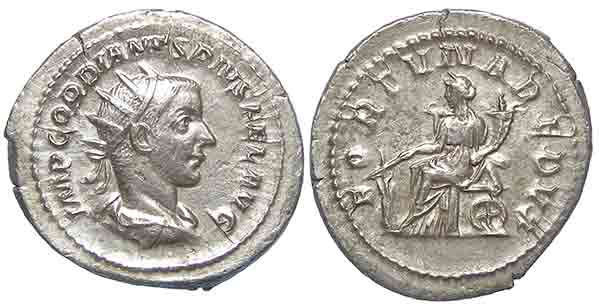
Perfect centering on a flan broad enough so extra metal can even frame the border results in a medallic strike. When medallic struck coins are high grade and well struck we can see everything the celator engraved on the dies plus the framing of the border results in exceptional eye-appeal. Such coins command exceptional prices, but are rare. This Gordian III antoninianus has a medallic strike but also a defect to such coins. When a broad flan is of typical weight, it has to be thinner than usual. If the designs as engraved into both dies combined are deeper than the thickness of the flan, striking cannot force metal fully into those designs and some striking weakness will result. Even with minor weakness this Gordian III is worth a premium over on with a normal flan size and centering. Well-Centered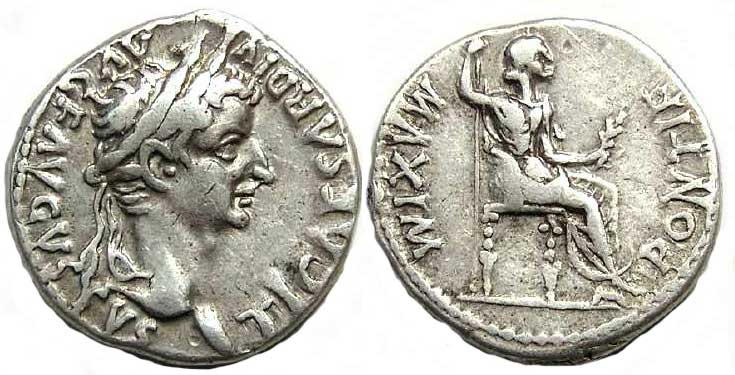
Well-centered coins have nearly complete designs and inscriptions with only the tips of a few letters or a small part a portrait's truncation can be off, but the border need not be complete. This Tiberius denarius with only the tips of three letters off the edge is still considered well-centered in spite of most of the border beads off the edge. 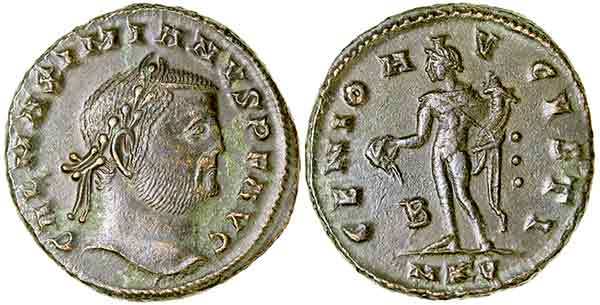
The only thing off the edge on this Galerius follis is about 50% of the border beads, so it is also considered to be well-centered.
Tiberius denarii are normally found with significant parts of the inscriptions off so this example is above average centering for the type and will command a premium price over the standard price guide price for an example in this grade. Galerius follii are normally found well centered so this example is what the price guides expect and are priced for, and off-center examples would sell at a discount. Knowing how to apply this to any specific type requires some experience or research. Average Centering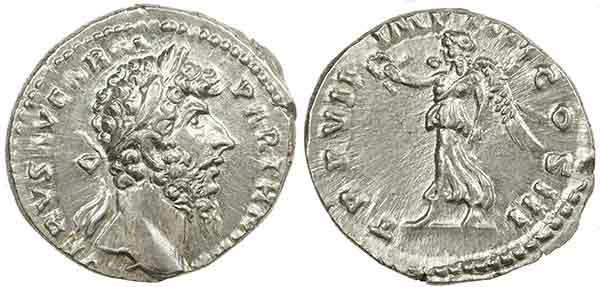
Most ancient coins are like this Lucius Verus denarius, with some letters partly off the edge, or even minor parts of the inscription totally off. The front tip of the bust truncation is also off. This example is a little better centered than average but not by enough to consider it well-centered. 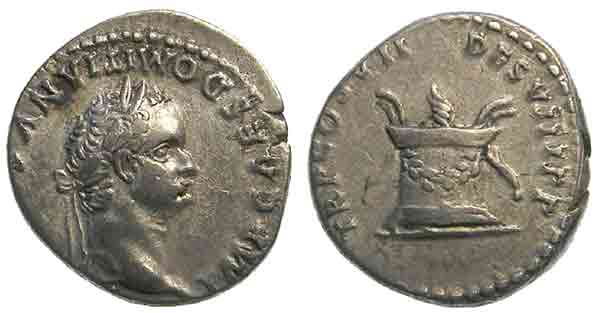
Centering also considers what is off the edge. About 30% of the obverse inscription of this Domitian denarius is off, but the Emperor's name is fully on the coin so this still qualifies as average centering. Had the missing portion included his name it would be considered poorly centered. 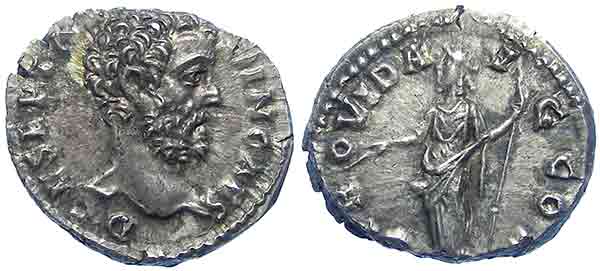
The same is true for the designs. This Clodius Albinus denarius is missing a bit of his hair but there is only a minor reduction in the eye-appeal so this coin is still of average centering. Had it been off-center to the right so part of his nose was off there would have been a dramatic reduction in eye-appeal and it would be considered poorly centered even though the same percentage of the design was off. Poor Centering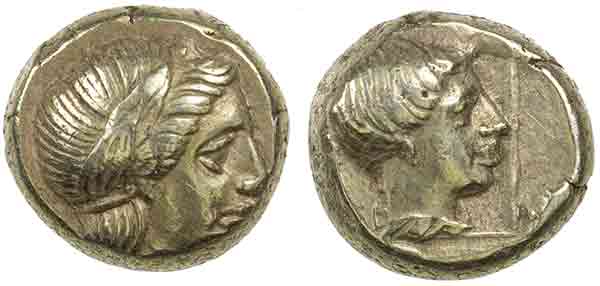
With the entire chin off the obverse of this Lesbos heckte, the eye-appeal is significantly reduced and that side is poorly centered. On the reverse the top of the head is off but it is just barely noticeable and the eye-appeal not significantly reduced, so this side of the coin should be considered of average centering. This illustrates how each side of a coin can be judged independently. 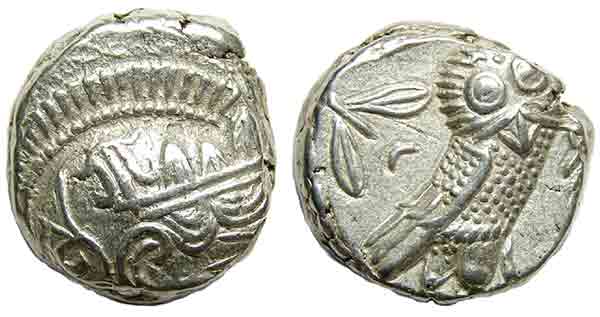
This Athenian tetradrachm speaks for itself. If you are new to this type you might not realize you are looking at the top of Athena's helmet with her entire face off the flan. One can only describe this obverse as very poorly centered, although this particular type is seldom encountered well centered because the flans were normally smaller than the dies. Centering is usually described as an absolute. A poorly centered coin in a series normally seen poorly centered, should be described as poorly centered, as typical of the issue, and price guides assume such in which case examples with average centering bring a premium. When a coin is poorly centered, novice collectors might not realize what is off the flan unless it is pointed out. Even when an image is provided poor centering should be included in the coins written description. Well centered and perfectly centered coins, or medallic strike coins need not be described but since they sell at premiums, describing their centering is not a bad idea. There is no need to comment on coins of average centering. 
Next page: striking characteristics Copyright © 2016 R & T Enterprises Ltd. |
 |
 |